
Annual Partners Meeting 2025
The Call to Action on (CtA) Protection from Gender-Based Violence (GBV) in Emergencies convened its Annual Partner Meeting in Oslo from 2 to 3 December hosted by the Government of Norway.
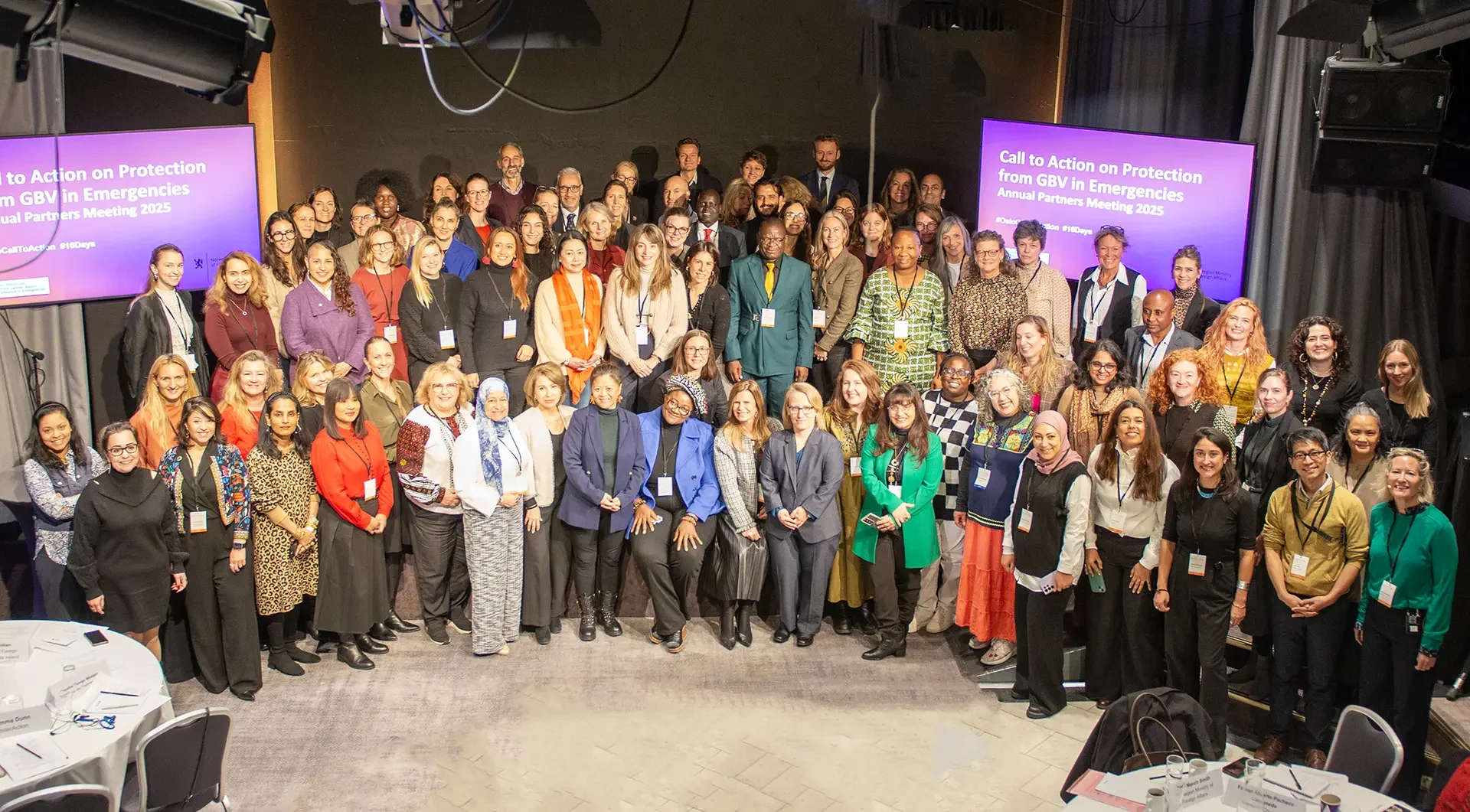
© Karen Toftera/NORCAP
The meeting brought together 100 partners, including states and donors, international organisations, Non-Governmental Organisations (NGOs) and Women-Led Organisations (WLOs). Discussions took place against a backdrop of the humanitarian funding crisis, political pushback on women’s rights and gender equality, and the broader Humanitarian Reset, with a shared recognition that these dynamics are having profound implications for women, girls, and the delivery of GBV prevention and response services in humanitarian settings.
The meeting opened with strong leadership signals that shaped the tone and substance of the discussions that followed. In her remarks, Ms. Stine Renate Håheim, State Secretary at the Norwegian Ministry of Foreign Affairs, framed the current moment as one of profound challenges, requiring political courage, solidarity, and alliance-building to protect women and girls. Her message underscored that the impacts of funding cuts and political retreat are already being felt, and that collective action will be essential to withstand what is likely to be a prolonged period of pressure on humanitarian and protection systems. This leadership framing was reinforced by video remarks from the Emergency Relief Coordinator, Mr. Tom Fletcher, who elevated the voices of WLOs and emphasized the importance of listening to, and acting with, those closest to affected communities. Together with the Director-level dialogue with senior leadership from UNHCR, UNFPA and WLOs, these contributions conveyed that leadership, advocacy, and political engagement are central to sustaining GBV prioritisation in the current environment.
Throughout the meeting, the consequences of funding cuts, particularly for local and womenled organisations delivering GBV services were highlighted. While partners acknowledged that overall humanitarian financing is unlikely to increase in the near term, there was strong consensus that this reality makes advocacy and political leadership increasingly critical with CAFI being acknowledged for its important role in leading the advocacy efforts by WLOs. Discussions pointed to the need to move toward predictable, equitable, and sustainable systems for financing, including improved access to pooled funds, simplified funding modalities, and better risk-sharing with local partners.
The Humanitarian Reset featured prominently as both a risk and an opportunity. Participants expressed concern that, without intentional advocacy, the reset could undermine gender equality and erode hard-won gains on GBV. At the same time, it was emphasised that the reset could be leveraged to reassert GBV as a core humanitarian priority and to embed stronger expectations and systems for financing and accountability. In this context, the role of states and donors as political actors, able to influence policy, diplomacy, and system-wide norms, was underscored.
Discussing accountability and leadership, participants stressed that Humanitarian Coordinators and Humanitarian Country Teams must be held accountable for prioritising GBV, including through strategic decision-making and resource allocation. There was broad agreement that strengthening accountability should focus on better integrating GBV into existing mechanisms rather than creating new structures, and that sustained high-level advocacy will be required to ensure this happens in practice. In this respect the meeting underlined the opportunities inherent in creating alliances with other platforms working on GBV. Related concerns were raised regarding the integration of the GBV Area of Responsibility into the Protection Cluster, with participants emphasising the importance of close monitoring to ensure that GBV leadership, visibility, and financing are not diminished.
Discussions on localisation reinforced the need for systemic change in how humanitarian financing and partnerships are structured. Women-led organisations highlighted that localisation will remain aspirational unless accompanied by shifts in power, access to funding, and risk-sharing. These perspectives further reinforced the importance of advocacy aimed at reforming financing systems so that they better support local leadership and sustainable GBV responses.
Looking ahead to the development of the 2026–2030 Call to Action Roadmap, there was strong agreement that the CtA’s goal and core objectives remain valid, and that its role as a global platform bringing together states, international organisations, NGOs and WLOs is critical. In this context, partners also underscored the need to address the sustainability and governance of the CtA itself, including clearer accountability for collective commitments, more meaningful reporting on progress and impact, and ways to better share the current workload. There was broad support for framing the new Roadmap around shared commitments and collective action, supported by more taskoriented, cross-stakeholder working arrangements focused on priority issues.
The meeting concluded with a clear sense that, in the current context, leadership, advocacy, and systemic approaches to financing will be decisive in determining whether progress on GBV in emergencies can be sustained. A draft 2026–2030 Roadmap will be shared for consultation, and an summary from the meeting will be published on the Call to Action website.